Current Exhibition
The Place We Embody: Photographs by William Camargo and Diana Guerra
October 12 − December 11 in Student Services, Room 217
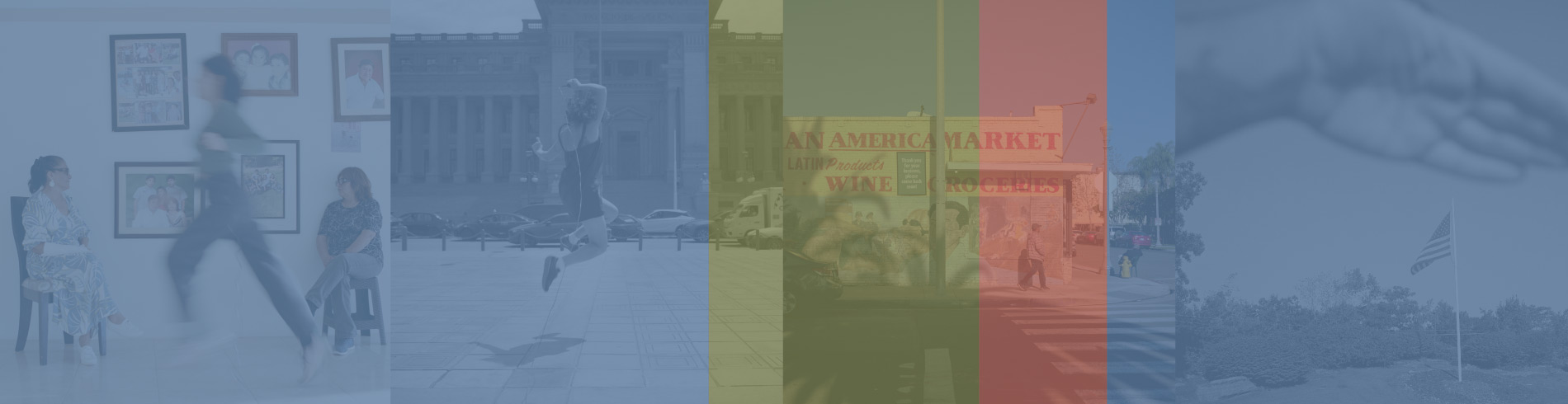
The Moreno Valley College Art Gallery presents The Place We Embody: Photographs by William Camargo and Diana Guerra, an exhibition of photo-based projects that use performance and conceptual photographic strategies as decolonial practice, intervening in the historical record, unearthing family and cultural memory, building connection, and reclaiming space.
Learn More About the Exhibition About the Artist
Exhibition Events
-
On View: October 12 – December 11, 2026
- Artist Talks: Thursday, October 15, 10 – 11 am in Humanities 109
-
Opening Reception: Thursday, October 15, 12:30 to 2 pm in Student Services 217 — Free and Open to the Public. Parking is free in Lots A and B.
- Viewing Hours: Refer to @mvc_arts on Instagram for most up to date hours
- Monday, 11 am - 4 pm
- Tuesday, Closed
- Wed, 10 am - 4 pm
- Thurs, 11 am - 2:30 pm
- Friday, 10 am - 2 pm
Featured Artwork
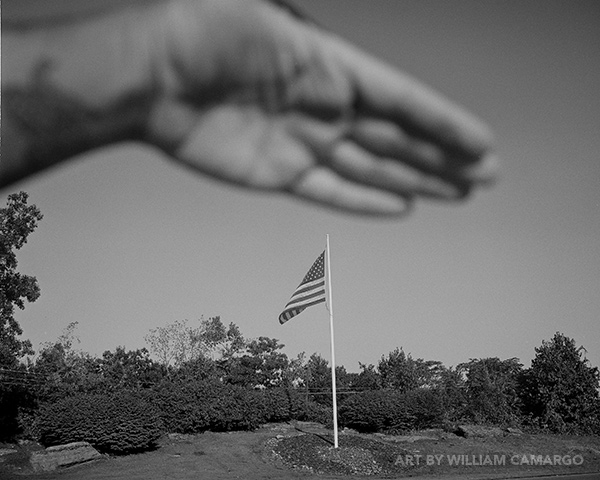
Untitled
From A Little Brown Interference Series
Inkjet on Paper Print, 2022
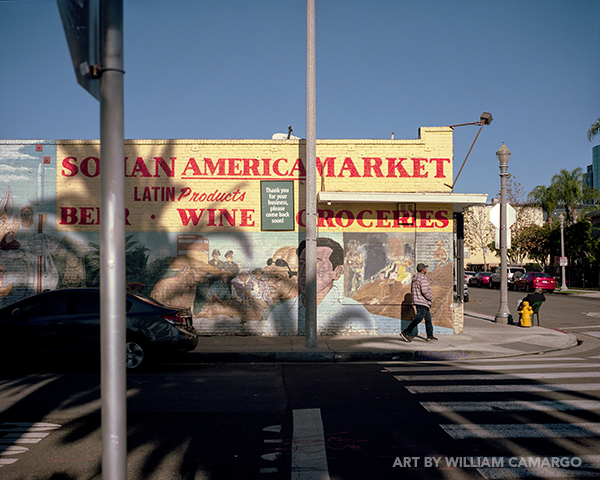
After Stephen Shore, But In Penguin City and Paisa
From Origins and Displacements Series
Inkjet on Paper Print, 2020
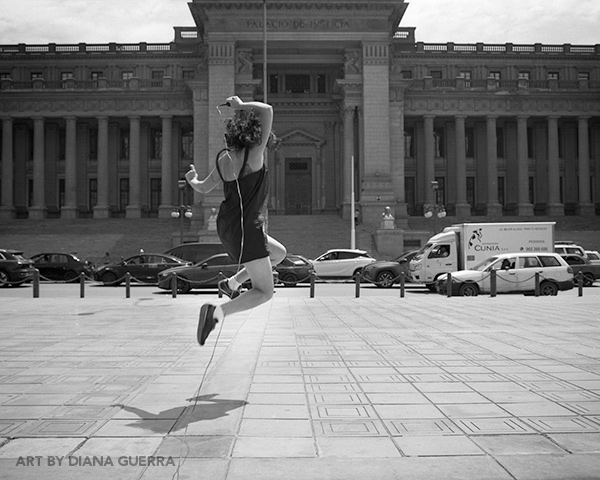
No Hay Justica
From (be)Longing Series
Inkjet on Paper Print, 2025
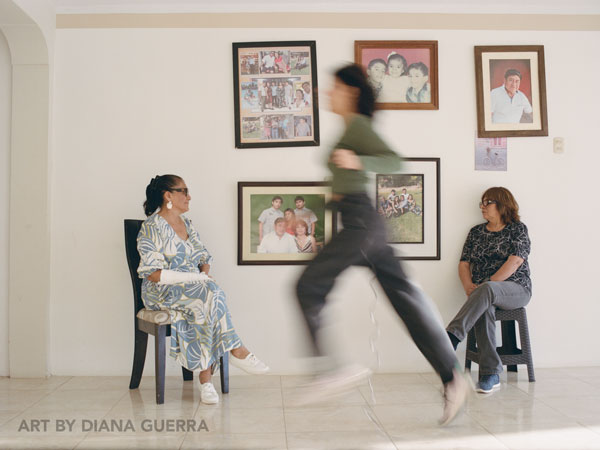
Generations Pass, Our Legacy Remains
From Camera as Kin Series
Inkjet on Paper Print, 2025
About the Exhibition
This exhibition features work by photographers William Camargo and Diana Guerra, two artists who think deeply about materials, methods, and memory as they relate to history, family, place, labor, and identity. The archive is the starting point for each artist, both of whom make equal use of official and unofficial archives in their creative research. From there, Camargo and Guerra merge the histories of people and place alongside their own lived experiences to create bodies of work that expand the official record.
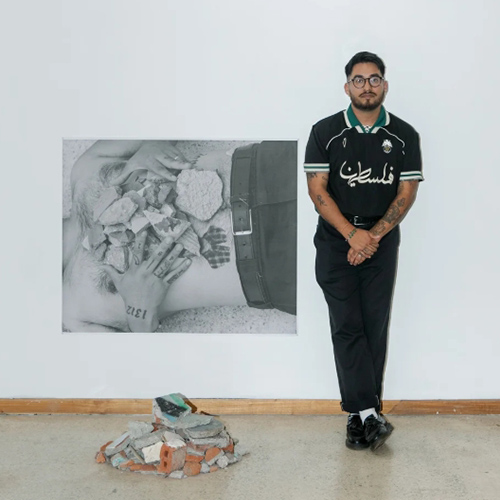
Selections from IE-based artist William Camargo’s series Origins and Displacements exemplify the photographer’s commitment to highlighting the existence of Mexican and Chicanx communities, past and present, in his hometown of Anaheim, California, especially in the shadow of the city’s gentrification and “Disneyfication.” This local project is complemented by images from Camargo’s series Reimagining the Canon, which critically examines the broader history of photography and asks what happens when the medium’s notable images are remade with Brown bodies at the center. The body becomes the tool of photographic intervention rather than oppression in Camargo’s series A Little Brown Interference, which situates sites of colonial history in a critical frame with the photographer’s hand appearing in a gesture of instruction and obfuscation.
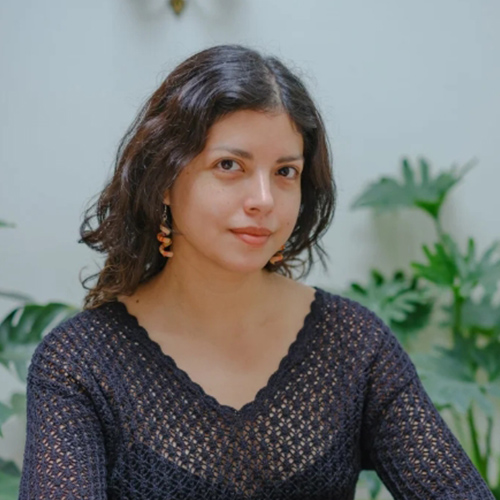
NYC-based artist Diana Guerra similarly engages with history and space, moving between perspectives of the personal and the public. Guerra, who was born in Peru and immigrated to the United States in 2015, often uses alternative photographic processes as means to express deeper emotions about loss and belonging than the image alone might communicate. For instance, the Peruvian staple of purple corn is the basis of the anthotype process in Guerra’s series Fleeting Under Light, for which she created a series of portraits of herself and family as she reflects on the experience of settling in a new city hundreds of miles away from home. A residency in Portugal in 2024 prompted the artist to develop a project wherein she stages an eruptive jump or twist of her body in otherwise mundane sites, capturing the action with the use of a shutter release cable that remains visible in the frame. Entitled (be)Longing, the series draws inspiration from the 1986 essay “The Body and The Archive” by artist and writer Allan Sekula. Guerra’s series takes heed of Sekula’s central argument that photographs of human subjects have served as tools of social categorization and control since the medium’s inception. By contrast, in images such as No Hay Justicia (There in No Justice) #2 from (be)Longing, Guerra’s active body serves as an intentional mark of resistance. With blurry, twisted form, Guerra’s insists on action in the face of state violence against citizens, a struggle faced by peaceful protestors in both Peru and in the United States. Returning to the domestic realm, Guerra continues to use the shutter release cable in her series Camera as Kin, this time allowing the artist to relinquish control for collaborative images that underscore the camera as a connector above all else.
In the photographs on view by Camargo and Guerra, the artists’ bodies and additions of textual elements in the image often become the tangible sites for marking and engaging with the more abstract dimensions of place and time, exposing the forgotten events, highlighting the invisible people, and uncovering the buried emotions that get lost or suppressed. Each artist is acutely conscious of the historic uses of the camera as a political tool on the side of state and colonial power, yet through their embodied interventions they work to engage the medium in a decolonial practice that highlights archival silences and reclaims its possibilities. Through overlapping practices that center performance, Camargo and Guerra explore how the body has the ability to remake and extend place in spite of established borders and narratives.
About the Artists
William Camargo is a lens-based artist and educator raised in Anaheim, California. He is a lecturer in photography at Pasadena City College and Cal State Fullerton. Camargo is the founder and curator of Latinx Diaspora Archives, an archive Instagram page that elevates communities of color through family photos. His work focuses on gentrification, police violence, and Chicanx/Latinx histories and comments on the hegemonic history of photography through archival research and performative interventions that live as photographs. Camargo has held residencies at the Latinx Project at NYU, Light Work in Syracuse, NY, TILT Institute in Philadelphia, Center for Photography at Woodstock, Penumbra Foundation in NYC, Aurora Photo Center in Indianapolis, and Satisfactory Casa in San Jose, Costa Rica. His works are in several public and private collections, including SFMOMA Library, Huntington Library, Museum of Fine Arts in Houston, Harvard Library, MSU Broad Art Museum, LACMA, and the J. Paul Getty Museum.
Diana Guerra is a Peruvian born lens-based artist and educator currently based in New York. Her work revolves around themes of memory, belonging, and identity (re)construction through a feminist and decolonial perspective. She received an MFA in Digital and Interdisciplinary Art Practice from the City College of New York and a bachelor’s degree in Sociology from the Pontifical Catholic University of Peru. Guerra’s early training in photography was at Parsons School of Design as part of the MFA Photography program. Selected exhibitions include the Bronx Museum, Museum of the City of New York, The Latinx Project, Mana Contemporary, Penumbra Foundation, Der Greif, and Photoville. Guerra is a 2026 Kahn | Mason SIP Fellow and a 2025 NYSCA/NYFA Artist Fellow in Photography. She received the AIM Bronx Museum Fellowship and the SPCUNY Faculty Fellowship in 2024, and the En Foco Photography Fellowship in 2022. She has been an artist in residence at the Center for Photography at Woodstock, NY; Wassaic Project, NY; Andamio, Lima, Peru; and Hangar, Center of Artistic Research, Lisbon, Portugal. Diana is currently an Adjunct Professor at The City College of New York (CUNY).