
Charles Long: From Moreno Valley College to Berkeley's Highest Honor
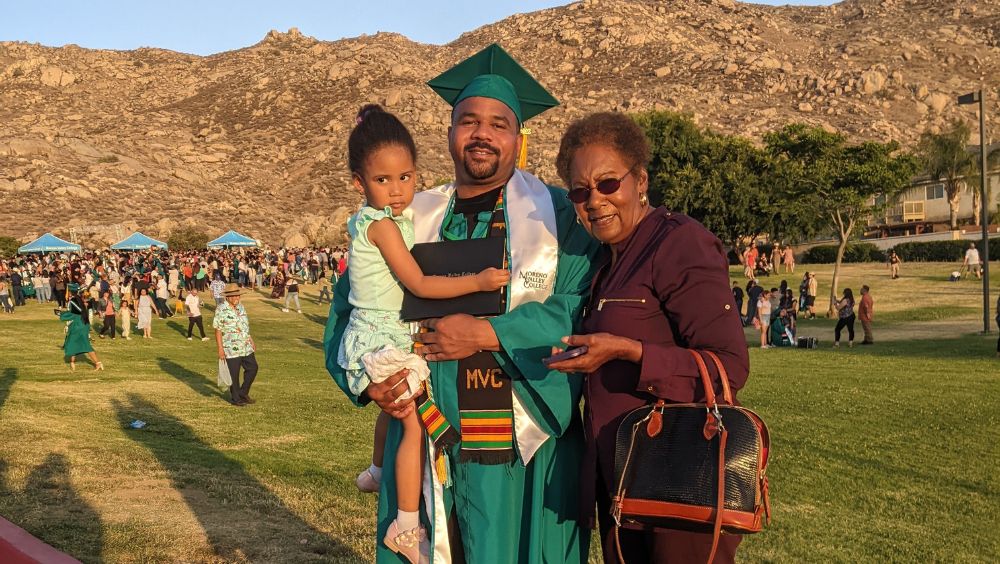
Charles Long graduated from high school with a 2.11 GPA and from UC Berkeley this May as the university’s 2026 University Medalist. He also delivered UC Berkeley’s undergraduate commencement address at Memorial Stadium alongside former U.S. Secretary of Labor Robert Reich.
Between those two moments is a life that does not follow a straight line, shaped by foster care, an arrest at 18 that Long maintains was wrongful, years of homelessness in San Jose, and a decade in Las Vegas rebuilding after incarceration. It is also a story that passes directly through Moreno Valley College, where Long began to understand, for the first time, what it felt like to be in school with purpose.
At 43, Long was selected from a pool of more than 9,000 graduating students to receive the honor. His story has since been featured in local news broadcasts and regional newspapers, highlighting his path from community college student to the university’s highest undergraduate honor.
“Quiet as it’s kept,” Long said with a laugh, “I graduated high school with a 2.11 GPA. I constantly failed classes because of attendance or because I refused to do what felt like pointless busywork. Returning as an adult showed me how much difference purpose makes.”
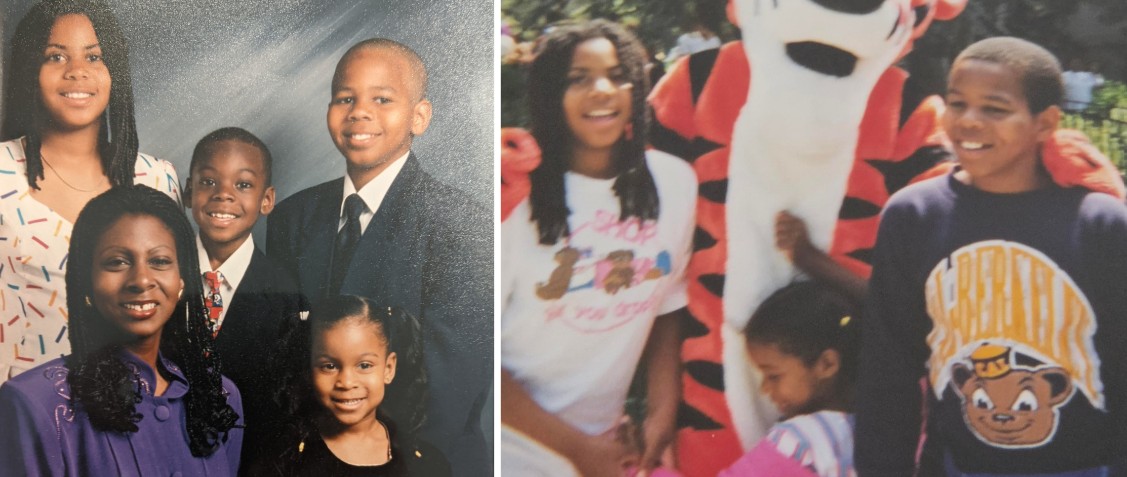
Long grew up in the care of relatives and the foster system. He is pictured here as a child with his mother and siblings.
Long grew up moving between foster homes and relatives in the Bay Area. His father called from prison. His mother visited between stints in drug rehabilitation. He ran away repeatedly as a child, often carrying little more than a fuzzy blanket and a He-Man doll. In the middle of that instability, one of the few steady presences in his life was a social worker whose care left a lasting imprint.
After high school, he was arrested at 18 for an assault he says he did not commit. He spent months in jail awaiting trial before accepting a plea deal, not because he was guilty, but because fighting the case felt more dangerous than surrender. He had seen what losing at trial could mean; his father once turned down a one-year offer and received ten. After his release, periods of homelessness, instability, and parole violations pulled Long back into prison multiple times.
In 2007, after his parole ended, Long left California for Nevada. He spent the next decade in Las Vegas exploring different career paths and earning diplomas in massage therapy, graphic design, and computer support. He was surviving, but he did not feel he was fulfilling his purpose. After getting married and having a daughter, survival was no longer enough. He wanted to return to the purpose planted in childhood by the social worker who first helped him.
“I don’t want to just tell her to chase her dreams,” he said. “I have to show her.”
Long enrolled at Moreno Valley College during the COVID-19 pandemic. He earned three associate degrees in psychology, sociology, and social and behavioral studies before transferring to UC Berkeley in fall 2022 at age 40.
The work at MVC, in classrooms, hallways, and conversations with faculty, was where he said he first understood what he was capable of.
“My Moreno Valley College experience is what showed me that life is hard, school is easy,” he said. “You realize how easy school is once life has kicked you in the ass.”
Associate Professor of Sociology James Bany, who taught Long in SOC-10H, said, “He brought critical perspectives to every class discussion and was an exceptional writer. It is no surprise that he would be recognized in this way.”
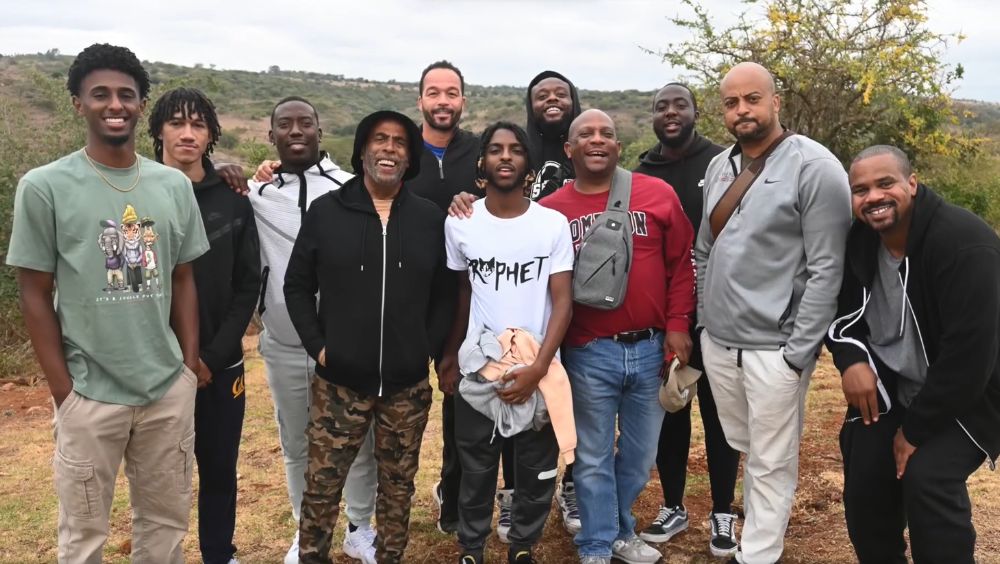
Long credited MVC faculty and staff with shaping both his confidence and direction. Umoja Coordinator Gertrude Lopez encouraged him to take advantage of opportunities he initially overlooked, eventually getting him involved in leadership of both the Umoja and A2MEND student organizations. English instructor Kathryn Stevenson left a lasting impression through her ability to build student confidence, an approach Long said he continues to emulate. Adam Felton’s Research Methods course prepared him for advanced academic work to such an extent that when he repeated a similar course at Berkeley, it felt, in his words, “cake in comparison.”
Professor of Philosophy Nick Sinigaglia also played a key role in his experience. “Nick knows how much he helped me,” Long said, “even beyond school and into personal issues. In a way, he embodied all the best qualities of my favorite MVC staff and faculty in one person.”
While Long admits he mostly kept to himself as an introvert on campus, he found deep inspiration within MVC’s community. “My closest contacts were members of A2MEND,” he said, referring to the African American Male Education Network and Development program. “Especially a couple of young men with different cognitive and physical challenges who didn’t let that stop them from showing up every day. They never passed me without a smile and a hello. They inspired me and made me feel seen. I wanted to return the favor.”
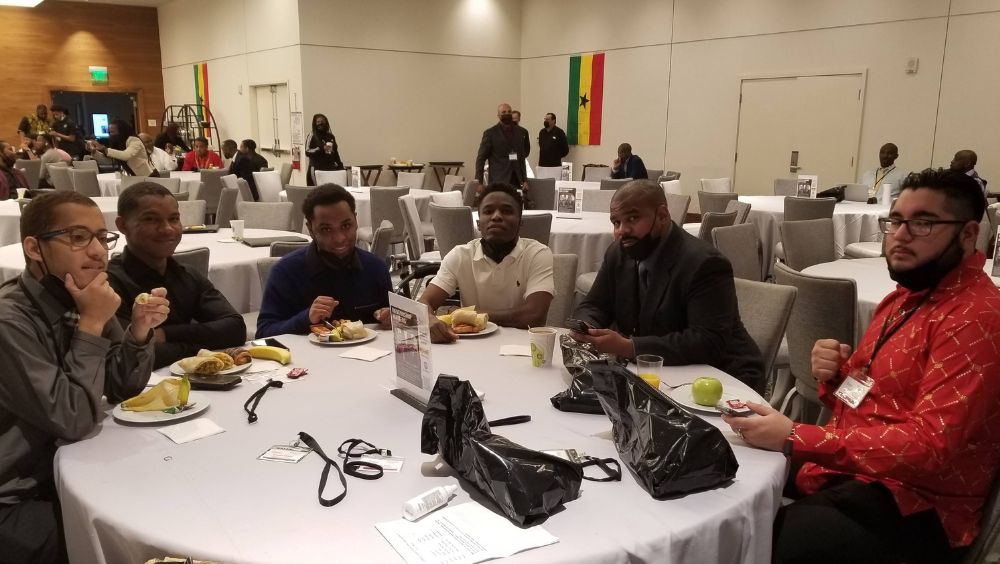
Being seen, and seeing others, became a theme Long carried with him. That influence showed up again in Long’s commencement speech, when he told graduates: “The world does not need us all to agree on everything. It does need us to remember that we belong to one another. Across our differences, we share a responsibility to leave people more free, more safe, more seen, and more loved than we found them.”
At Berkeley, Long pursued a double major in sociology and social welfare, focusing his academic work on incarceration, education access, and institutional systems. His senior thesis examined empathy development among students who tutor incarcerated learners at San Quentin State Prison and mapped degree-granting programs in correctional facilities nationwide to assess gaps in educational access and equity.
He became active in mentorship and service programs, working with justice-involved youth in Bay Area juvenile halls and with incarcerated students through campus-based initiatives. He completed more than 900 hours of community service through California’s College Corps program while maintaining a 4.0 GPA.
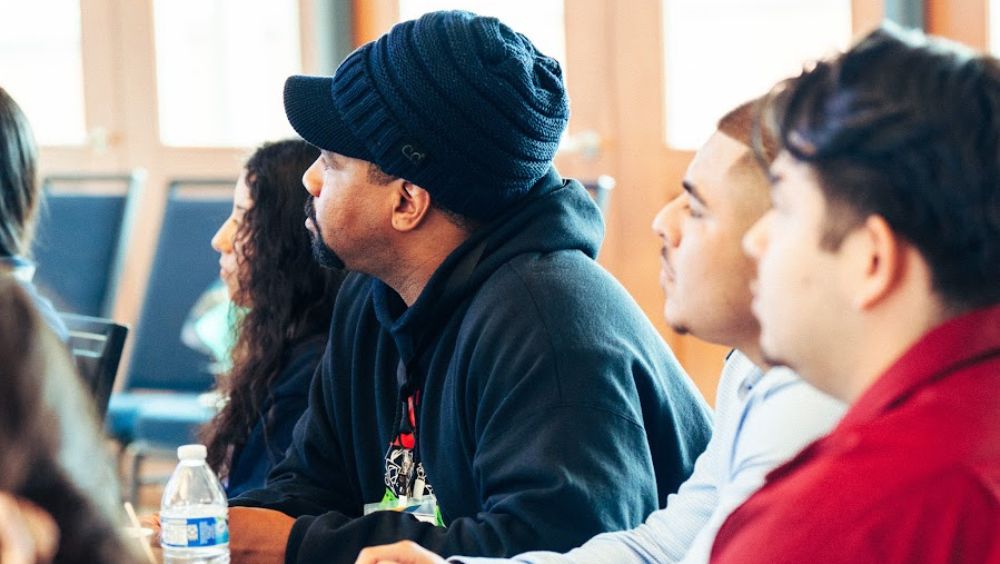
Long is pictured with classmates during his time at UC Berkeley.
“His contributions to class discussions, shaped by his own experiences being formerly incarcerated and growing up in the foster care system, had a profound impact on his peers,” wrote Laleh Behbehanian, a continuing lecturer in UC Berkeley’s Department of Sociology. “Charles is a brilliant young scholar whose potential is unparalleled among his peers.”
On the day of his University Medal interview, Long chose between a pressed suit and a black hoodie. The suit felt safe; the hoodie felt honest. He has said he wears hoodies as a reminder of how young Black boys are criminalized for something as simple as clothing. He wanted his presence to challenge public perception: “What does a scholar look like?” He chose the hoodie. The committee selected him.
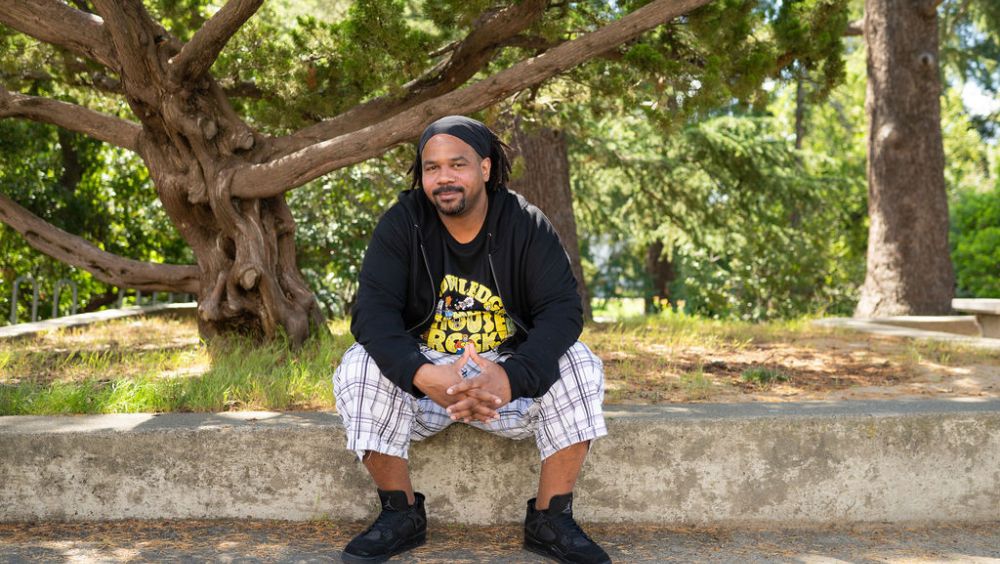
When asked what the University Medal represented to him, Long said, “Probably less than many people would think. Not because I don’t appreciate it, but because I never pursued it for what it would mean to me alone. I did it because I knew I had a chance, and I felt that at least trying was a responsibility because of what it could mean to others.”
Most of his joy has come from people who have stopped him on the street or on the bus to say they shared his story with someone they hoped to inspire, and from his parents, whose voices have changed in ways he still finds difficult to describe.
“To hear the change in their voices, in the way they speak now, it’s something I can barely describe,” he said. “It felt like a fear had finally been lifted from both of them.”
“The fear of, ‘When is the next time Charles will get locked up? Will Charles ever get his life together? Will Charles ever fulfill his potential?’” Long said. “I think those questions have finally been removed. For probably the first time ever, they trust that I know and will do what’s best for me. They’ve reached a point where they trust my judgment even more than their own. That’s a hard place to reach in a parent-child relationship.”
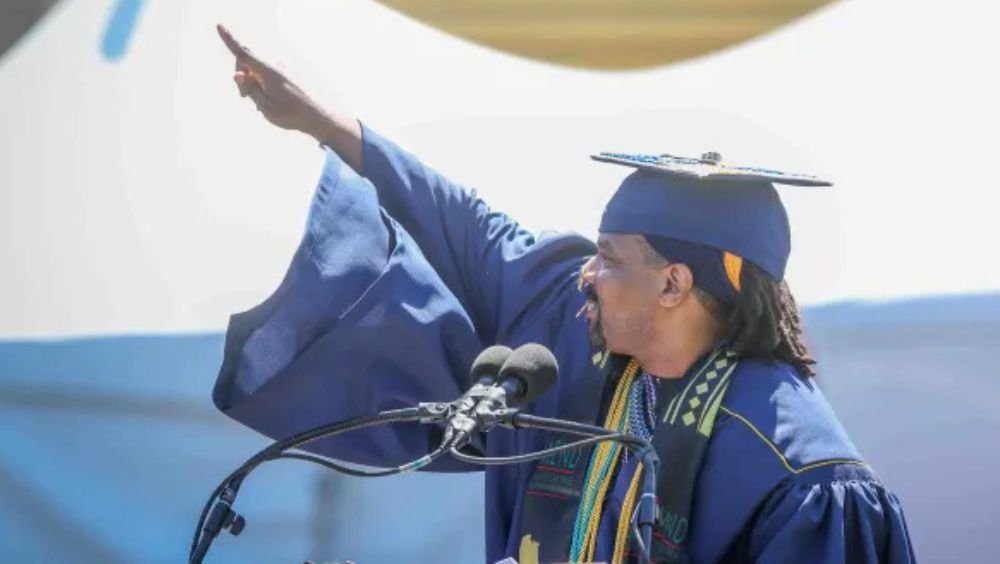
After graduation, Long plans to spend time in Africa before applying to doctoral programs. He hopes to develop programs that support justice-involved youth and expand alternatives to incarceration through education and access.
When asked what advice he has for other students, he said, "I think people who give blanket advice for the way life be life-ing often just don't understand. Everyone goes through experiences that no one else can fully understand… A lot of answers have to come from within. Look inward for many of your answers, because if you stay looking outside yourself for them, you'll end up like a piece of seaweed getting whipped around by the current, with no real control over your own destiny."